Trademark Search API in India: The Complete Developer Guide (2026)
June 12, 2026
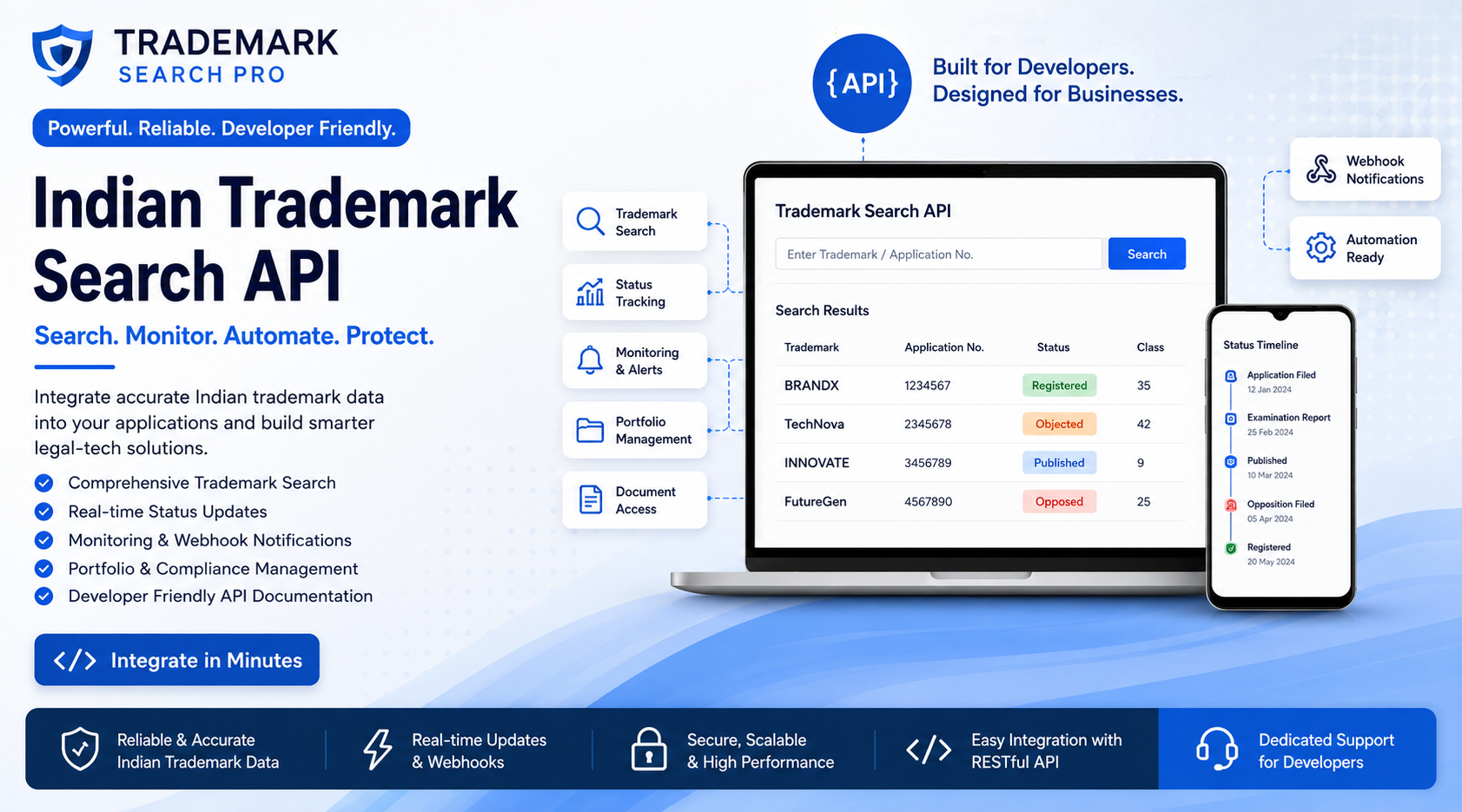
Trademark Search API in India: The Complete Developer Guide (2026)
The way businesses interact with trademark data is changing rapidly. What was once a manual process involving repeated searches, spreadsheets, email follow-ups, and continuous monitoring is now becoming automated through APIs.
Whether you are building a legal technology platform, startup incorporation service, e-commerce marketplace, intellectual property management solution, or an enterprise compliance system, access to trademark intelligence through APIs has become increasingly valuable.
A Trademark Search API allows developers to integrate trademark-related information directly into their applications, eliminating repetitive tasks and enabling users to access critical trademark insights instantly.
This guide explains what an Indian Trademark Search API is, why businesses are adopting it, common use cases, and how modern APIs are helping organizations automate trademark workflows.
What Is a Trademark Search API?
A Trademark Search API is a software interface that allows applications to retrieve trademark-related information programmatically.
Instead of manually searching trademark databases through web portals, developers can connect their applications to an API and receive structured responses containing relevant trademark information.
These responses are generally delivered in machine-readable formats such as JSON, allowing seamless integration into:
- SaaS applications
- Mobile applications
- CRM platforms
- Legal practice management systems
- E-commerce marketplaces
- Brand protection solutions
- Enterprise dashboards
The objective is simple:
Enable businesses to access trademark intelligence efficiently and integrate it into their existing workflows.
Why Businesses Are Adopting Trademark APIs
Modern businesses increasingly depend on automation.
Trademark-related activities often involve multiple stakeholders, repeated checks, and strict timelines. Conducting these activities manually may consume significant resources.
Organizations are therefore seeking solutions that can help them:
- Reduce manual effort.
- Improve operational efficiency.
- Deliver faster services to clients.
- Monitor trademark developments continuously.
- Integrate trademark intelligence into their existing systems.
Trademark APIs enable organizations to shift from reactive processes toward proactive trademark management.
Industries That Benefit From Trademark APIs
Trademark APIs are no longer limited to intellectual property professionals.
Several industries are finding value in trademark automation.
1. Law Firms
Law firms can integrate trademark intelligence into their internal systems to:
- Conduct preliminary searches.
- Track application developments.
- Monitor client portfolios.
- Improve client communication.
2. Legal Technology Platforms
Legal technology providers often require access to trademark information to build comprehensive solutions.
Trademark APIs can help them offer:
- Search functionality.
- Monitoring services.
- Automated alerts.
- Client dashboards.
3. Startup Incorporation Platforms
Startups frequently conduct brand availability checks before launching products or services.
Trademark APIs can assist these platforms by enabling:
- Preliminary trademark assessments.
- Faster decision-making.
- Improved customer experiences.
4. E-Commerce Marketplaces
Marketplaces increasingly focus on protecting brands operating within their ecosystems.
Trademark intelligence can support:
- Seller onboarding processes.
- Brand verification initiatives.
- Internal review workflows.
5. Enterprise Compliance Teams
Large organizations managing multiple brands often require centralized visibility into trademark-related developments.
Trademark APIs may assist in:
- Portfolio oversight.
- Compliance management.
- Notification workflows.
Key Features Businesses Often Seek in Trademark APIs
When evaluating trademark APIs, organizations typically consider several factors.
Comprehensive Trademark Data Access
Businesses often prefer APIs that provide access to detailed trademark information rather than basic search outputs.
Comprehensive information may improve decision-making and reduce dependency on multiple tools.
Structured Responses
Developers generally prefer APIs that return standardized JSON responses.
Benefits include:
- Faster implementation.
- Reduced parsing complexity.
- Easier integration.
Monitoring Capabilities
Trademark activities continue long after filing.
Monitoring-related capabilities may support:
- Portfolio oversight.
- Client reporting.
- Risk awareness.
Automation Support
Organizations increasingly seek opportunities to automate repetitive tasks.
Automation-friendly APIs can assist with:
- Workflow orchestration.
- Notification triggers.
- Internal integrations.
Scalability
As businesses grow, their trademark-related requirements often expand.
Scalable APIs can help accommodate increasing transaction volumes without requiring major architectural changes.
The Evolution of Trademark Management
Historically, trademark management involved several disconnected processes.
For example:
- Conduct searches manually.
- Record results in spreadsheets.
- Periodically revisit databases.
- Send updates through emails.
- Track deadlines separately.
Modern organizations increasingly prefer unified approaches.
Trademark intelligence integrated directly into business applications enables teams to work more efficiently.
Integrating Trademark APIs Into Existing Systems
Integration requirements vary depending on organizational needs.
However, many implementations follow a similar pattern.
Step 1: Authentication
Applications establish secure communication using credentials provided by the API provider.
Step 2: Data Requests
Applications submit requests containing relevant parameters.
Examples may include:
- Trademark identifiers.
- Proprietor information.
- Classification details.
Step 3: Structured Responses
The API returns machine-readable information that applications can process automatically.
Step 4: Workflow Integration
Businesses incorporate this information into existing processes.
Examples include:
- Dashboards.
- Internal reports.
- Client portals.
- Notification systems.
The Growing Importance of Trademark Intelligence
Trademark information is no longer viewed merely as administrative data.
Organizations increasingly treat it as business intelligence.
Trademark intelligence may contribute to:
- Brand strategy.
- Competitive awareness.
- Risk identification.
- Portfolio optimization.
Businesses that operationalize trademark intelligence often position themselves to respond more effectively to emerging developments.
Why Developer Experience Matters
Even the most comprehensive datasets may create implementation challenges if developer experience is overlooked.
Developers typically value:
- Clear documentation.
- Consistent response structures.
- Predictable behavior.
- Integration simplicity.
Organizations evaluating APIs should therefore consider both technical capabilities and implementation experiences.
Building Better Customer Experiences
Businesses increasingly compete on experience.
End users often expect:
- Faster access to information.
- Real-time visibility.
- Self-service capabilities.
Trademark-enabled applications can contribute toward these expectations by delivering timely information within familiar interfaces.
The Future of Trademark Technology
Trademark technology continues to evolve.
Several trends are shaping the future of the industry:
Increased Automation
Organizations seek opportunities to reduce manual interventions.
Workflow Integration
Trademark information is increasingly integrated into broader operational ecosystems.
Real-Time Notifications
Businesses increasingly prefer proactive updates rather than periodic checks.
Centralized Visibility
Decision-makers often seek unified access to trademark intelligence across portfolios.
Choosing the Right Trademark API Partner
Selecting a trademark API involves more than evaluating endpoints.
Organizations may wish to consider factors such as:
Reliability
Can the solution support long-term operational requirements?
Breadth of Capabilities
Does the provider support evolving business needs?
Ease of Integration
Can developers implement the solution efficiently?
Scalability
Will the solution continue supporting growth?
Support Resources
Are documentation and onboarding resources readily available?
How Trademark Search Pro Supports Modern Businesses
Trademark Search Pro is designed to help organizations simplify trademark-related workflows through technology.
Businesses can leverage the platform to support activities such as:
- Trademark intelligence initiatives.
- Monitoring processes.
- Portfolio oversight.
- Workflow automation.
- Operational efficiency improvements.
By focusing on usability, automation, and integration readiness, Trademark Search Pro aims to help businesses incorporate trademark intelligence into their existing ecosystems.
Final Thoughts
Trademark management is becoming increasingly technology-driven.
Organizations that continue relying entirely on manual processes may encounter challenges related to efficiency, scalability, and responsiveness.
Trademark APIs provide opportunities to modernize these workflows by integrating trademark intelligence directly into business applications.
Whether you are building a legal technology product, expanding an enterprise compliance program, supporting marketplace operations, or creating innovative brand protection solutions, trademark APIs can help transform how trademark information is utilized.
As demand for automation grows, businesses that invest in scalable trademark technologies today may position themselves more effectively for tomorrow's challenges.
Frequently Asked Questions
What is a Trademark Search API?
A Trademark Search API allows applications to access trademark-related information programmatically using standardized requests and responses.
Who can benefit from trademark APIs?
Law firms, startups, legal technology companies, enterprises, marketplaces, and brand protection providers can benefit from trademark APIs.
Why are businesses integrating trademark APIs?
Businesses often seek improved efficiency, automation, centralized visibility, and enhanced customer experiences.
Can trademark APIs support workflow automation?
Yes. Many organizations integrate trademark intelligence into broader operational workflows to reduce manual effort.
Are trademark APIs suitable for enterprise environments?
Modern APIs are increasingly designed to support scalable business requirements across organizations of varying sizes.
Explore Trademark Search Pro API
If your organization is exploring ways to modernize trademark-related workflows, Trademark Search Pro offers resources to help developers and businesses understand integration possibilities.
Learn more about the API documentation and discover how trademark intelligence can support your operational objectives.
Explore API Documentation: https://api.trademarksearchpro.com/docs/#intro
Discover Platform Features: https://trademarksearchpro.com/features
Visit Trademark Search Pro: https://trademarksearchpro.com
.jpeg)
.png)