Indian Trademark API for e-commerce marketplaces by Trademark Search Pro
June 15, 2026
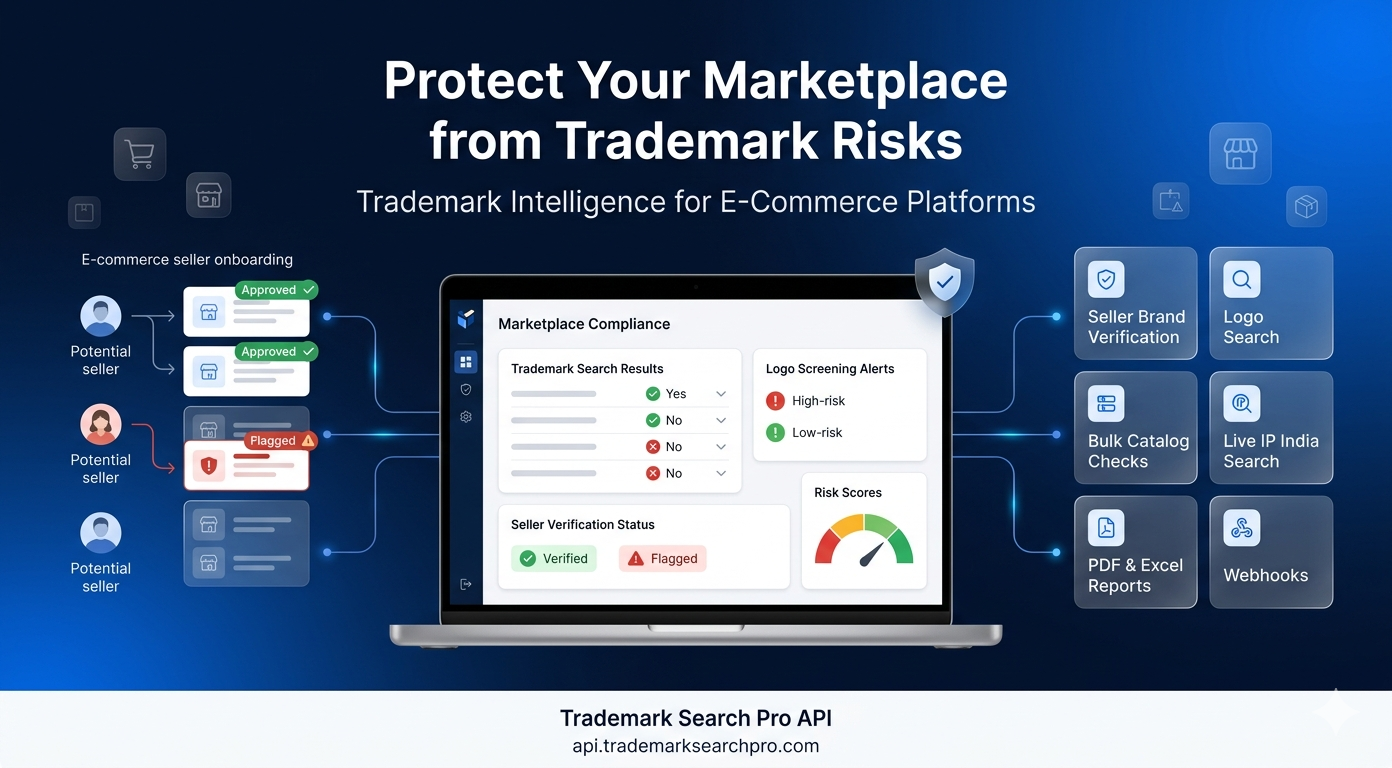
Indian Trademark API for e-commerce marketplaces
How E-Commerce Marketplaces Can Use Trademark APIs to Reduce Brand Risk
E-commerce marketplaces have transformed the way businesses sell products. From small entrepreneurs launching private-label brands to established companies expanding their online presence, marketplaces have become the preferred channel for reaching customers.
However, with this rapid growth comes a significant challenge: brand risk.
Marketplaces process thousands of new listings every day. Sellers upload product descriptions, logos, brand names, packaging images, and promotional content at scale. Without proper verification mechanisms, platforms may unintentionally allow listings that infringe on existing trademark rights.
Trademark disputes can result in takedown requests, legal notices, customer confusion, damaged marketplace reputation, and operational costs associated with dispute resolution.
This is where Trademark APIs become invaluable.
By integrating a trademark intelligence layer directly into marketplace workflows, e-commerce platforms can proactively identify potential trademark conflicts before listings go live.
Why Brand Risk Is Increasing in E-Commerce
Modern marketplaces face several challenges:
-
Rapid onboarding of new sellers
-
High-volume product uploads
-
Growth of private-label businesses
-
Increasing awareness of intellectual property rights
-
Expansion into multiple product categories
Traditional manual trademark checks are often too slow to keep up with marketplace operations. Legal teams cannot realistically review every listing individually.
As marketplaces scale, automated trademark screening becomes essential.
Understanding Trademark APIs
A Trademark API allows applications to access trademark-related information programmatically.
Instead of manually visiting government portals, entering search criteria, downloading reports, and reviewing records one by one, marketplaces can automate these processes through APIs.
Trademark APIs can provide access to information such as:
-
Trademark search results
-
Registration status
-
Proprietor details
-
Filing information
-
Trademark classes
-
Logo similarity results
-
Reports and analytics
-
Monitoring alerts
By integrating these capabilities into existing systems, marketplaces can make faster and more informed decisions.
How Trademark APIs Help Reduce Brand Risk
1. Seller Brand Verification During Onboarding
Many marketplaces allow sellers to register using their own brand names.
Before approving a seller account, marketplaces can automatically screen the submitted brand name against trademark databases.
This process helps identify:
-
Exact trademark matches
-
Similar brand names
-
Potential conflicts in relevant classes
-
Existing registrations owned by other entities
By introducing verification during onboarding, marketplaces can reduce the likelihood of future disputes.
2. Trademark Screening Before Product Listings Go Live
Every day, marketplaces receive large volumes of new listings.
Without automated screening, potentially infringing listings may become publicly visible before they are detected.
Trademark APIs can evaluate seller-submitted information such as:
-
Product brand names
-
Product titles
-
Labels and packaging details
-
Trademark class information
If a listing triggers predefined risk criteria, it can be routed for additional review before approval.
This approach allows marketplaces to maintain efficiency while improving compliance standards.
3. Logo Similarity Checks
Brand infringement is not limited to text-based trademarks.
Sellers may inadvertently—or intentionally—use logos that resemble existing registered marks.
Logo screening capabilities help marketplaces identify visually similar trademarks.
This can be particularly valuable for:
-
Fashion marketplaces
-
Beauty brands
-
Consumer goods platforms
-
Electronics marketplaces
-
Private-label programs
Automated logo verification adds another layer of protection against potential infringement claims.
4. Bulk Catalog Risk Assessment
Large marketplaces often manage millions of active listings.
Conducting individual reviews manually is impractical.
Trademark APIs enable bulk processing capabilities that allow marketplaces to evaluate entire catalogs efficiently.
Bulk checks can be used to analyze:
-
Existing product inventories
-
Newly imported seller catalogs
-
Seasonal campaigns
-
Promotional listings
-
Private-label product portfolios
This proactive approach helps marketplaces identify risks before they escalate.
5. Supporting Marketplace Compliance Teams
Trademark disputes require time, expertise, and coordination.
Compliance teams frequently investigate complaints involving:
-
Unauthorized brand usage
-
Similar product names
-
Counterfeit concerns
-
Seller disputes
Having structured trademark intelligence readily available can significantly improve response times.
Teams can access essential details such as:
-
Registration status
-
Filing dates
-
Proprietor information
-
Goods and services descriptions
-
Relevant classes
This enables faster decision-making and more consistent internal processes.
6. Improving Customer Trust
Customers expect marketplaces to provide authentic products from legitimate sellers.
When counterfeit or infringing products appear on a platform, customer confidence suffers.
By strengthening trademark verification procedures, marketplaces demonstrate their commitment to quality and brand protection.
Over time, this contributes to:
-
Improved seller standards
-
Enhanced marketplace reputation
-
Better customer experiences
-
Reduced legal exposure
Integrating Trademark APIs Into Marketplace Workflows
Trademark intelligence can be incorporated into multiple stages of the marketplace lifecycle.
Seller Registration
Marketplaces can evaluate seller-submitted brand names during onboarding.
Potential conflicts can trigger manual review workflows.
Product Listing Approval
Trademark checks can be performed automatically when sellers create listings.
High-risk results may require additional documentation.
Periodic Catalog Audits
Existing listings can be reassessed periodically to identify emerging risks.
This is particularly useful when new trademarks are registered.
Internal Review Systems
Compliance teams can access trademark information directly from internal dashboards.
This eliminates the need to switch between multiple systems.
Key Features to Look for in a Trademark API
Not all trademark solutions are designed with marketplace requirements in mind.
When evaluating providers, marketplaces should consider capabilities such as:
Comprehensive Search Capabilities
The ability to conduct trademark searches efficiently is fundamental.
Logo Screening
Visual similarity analysis provides additional protection beyond text searches.
Bulk Processing
High-volume environments require scalable infrastructure.
Structured Data Responses
Clean, developer-friendly outputs simplify integration efforts.
Report Generation
PDF and Excel reporting features support operational workflows.
Real-Time Monitoring
Ongoing monitoring capabilities help marketplaces remain informed about relevant developments.
Reliable Documentation
Comprehensive API documentation accelerates implementation.
How Trademark Search Pro Supports Marketplace Teams
Trademark Search Pro API is designed to help organizations integrate trademark intelligence into their existing systems.
The platform offers a broad range of capabilities that can support marketplace operations.
50+ API Endpoints
Access a wide range of trademark intelligence functions through a unified API ecosystem.
Trademark Search APIs
Perform searches using relevant trademark information to support internal reviews.
Logo Search Capabilities
Screen logos and visual elements as part of broader brand protection initiatives.
Bulk Search Features
Process large datasets efficiently to support catalog assessments.
Live IP India Search
Access current trademark information directly within operational workflows.
PDF and Excel Reports
Generate structured reports that facilitate internal decision-making.
Webhooks for Automated Updates
Receive updates automatically when relevant events occur, reducing the need for repeated API polling.
Best Practices for Marketplace Implementation
Organizations planning to integrate trademark intelligence should consider the following recommendations:
Define Risk Thresholds
Establish clear criteria for when listings should be approved automatically versus escalated for review.
Combine Automation With Human Oversight
Trademark APIs enhance efficiency but should complement—not entirely replace—professional judgment.
Educate Sellers
Providing guidance regarding acceptable branding practices can reduce future conflicts.
Monitor Continuously
Brand risk management should be an ongoing process rather than a one-time exercise.
Document Internal Procedures
Standardized workflows improve consistency across compliance teams.
The Future of Brand Protection in E-Commerce
As marketplaces continue to expand, intellectual property management will become increasingly important.
Consumers expect authenticity.
Brands expect protection.
Regulators increasingly emphasize accountability.
Technology-driven solutions, including Trademark APIs, can help marketplaces balance growth with responsible risk management.
Organizations that adopt proactive approaches today may be better positioned to navigate tomorrow's challenges.
Conclusion
Trademark disputes can disrupt marketplace operations, impact customer trust, and increase compliance costs.
While no system can eliminate all risks, integrating trademark intelligence into marketplace workflows can significantly strengthen preventive efforts.
Trademark APIs enable faster screening, support operational efficiency, and provide valuable insights that help teams make informed decisions.
For e-commerce marketplaces seeking scalable approaches to brand protection, trademark intelligence is becoming an increasingly important component of modern platform infrastructure.
Frequently Asked Questions
What is a Trademark API?
A Trademark API enables applications to access trademark-related information programmatically, helping businesses automate trademark research and verification tasks.
Why should marketplaces screen trademarks?
Trademark screening can help identify potential conflicts before listings are approved, reducing operational and legal risks.
Can Trademark APIs support bulk catalog reviews?
Yes. Many solutions offer bulk processing capabilities designed for high-volume environments.
Is logo screening important?
Yes. Trademark risks may arise from visual similarities as well as textual similarities.
What are webhooks in Trademark APIs?
Webhooks automatically notify connected systems when predefined events occur, reducing the need for continuous polling.
Can marketplaces integrate Trademark APIs into existing systems?
Yes. APIs are designed to integrate with onboarding systems, listing workflows, compliance tools, and internal dashboards.
Do Trademark APIs replace legal advice?
No. Trademark APIs provide valuable intelligence but should complement professional review processes where appropriate.
Who can benefit from Trademark APIs?
E-commerce marketplaces, legal teams, compliance departments, brand owners, and technology platforms can all benefit from trademark intelligence solutions.
Call to Action
Building a trusted marketplace requires proactive brand protection strategies.
With Trademark Search Pro API, marketplaces can integrate trademark intelligence directly into their workflows using 50+ endpoints, logo search capabilities, bulk processing tools, live IP India search, PDF and Excel reports, and webhook-based updates.
Explore how Trademark Search Pro API can help your platform streamline trademark screening and strengthen brand risk management practices.
Visit: api.trademarksearchpro.com
Book a demo to learn more about implementing trademark intelligence within your marketplace ecosystem.
.jpeg)
.png)